Services
Sharpening of other cutting tools
I sharpen a wide range of cutting tools, from tailor's, manicure and work scissors to axes, mower blades and other cutting implements.
I adapt the sharpening process to the type of tool, the shape of the blade, its construction and condition. I aim to get effective cutting while keeping as much usable material and working life in the tool as possible.
Not sure whether your tool can be sharpened? Describe it to me or send a photo, and we can agree on the options.
- Sharpening of all kinds of scissors, including tailor's, manicure and work scissors.
- Sharpening of axes and other tools with a cutting edge.
- Sharpening of mower blades.
- Sharpening of other cutting tools according to their construction.
- The sharpening process adapted to the type and condition of each tool.
How the sharpening is done, step by step
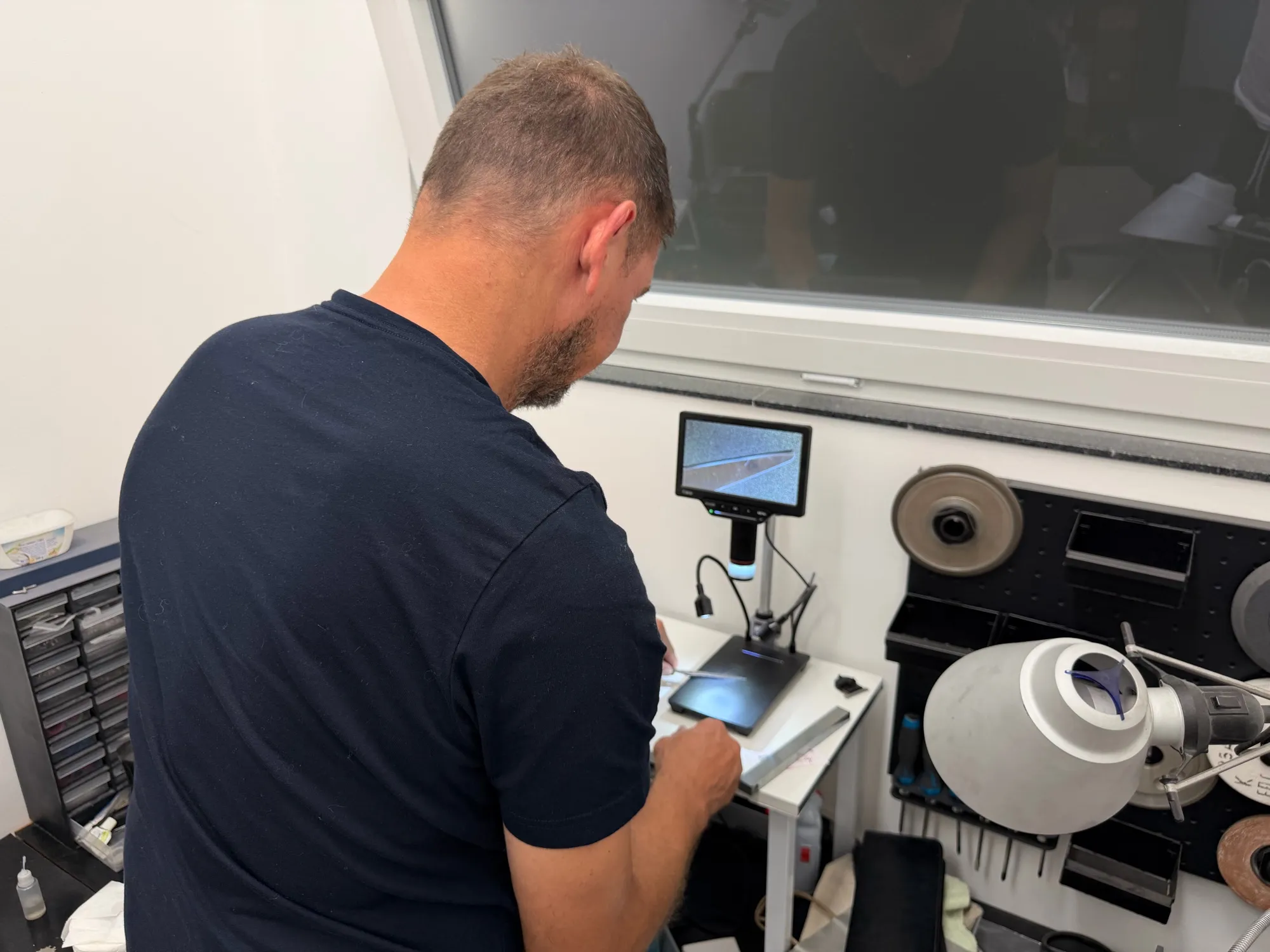
I first inspect every tool and assess the condition of the edge, wear and any damage. Based on its construction, material and intended use I choose the right sharpening process.
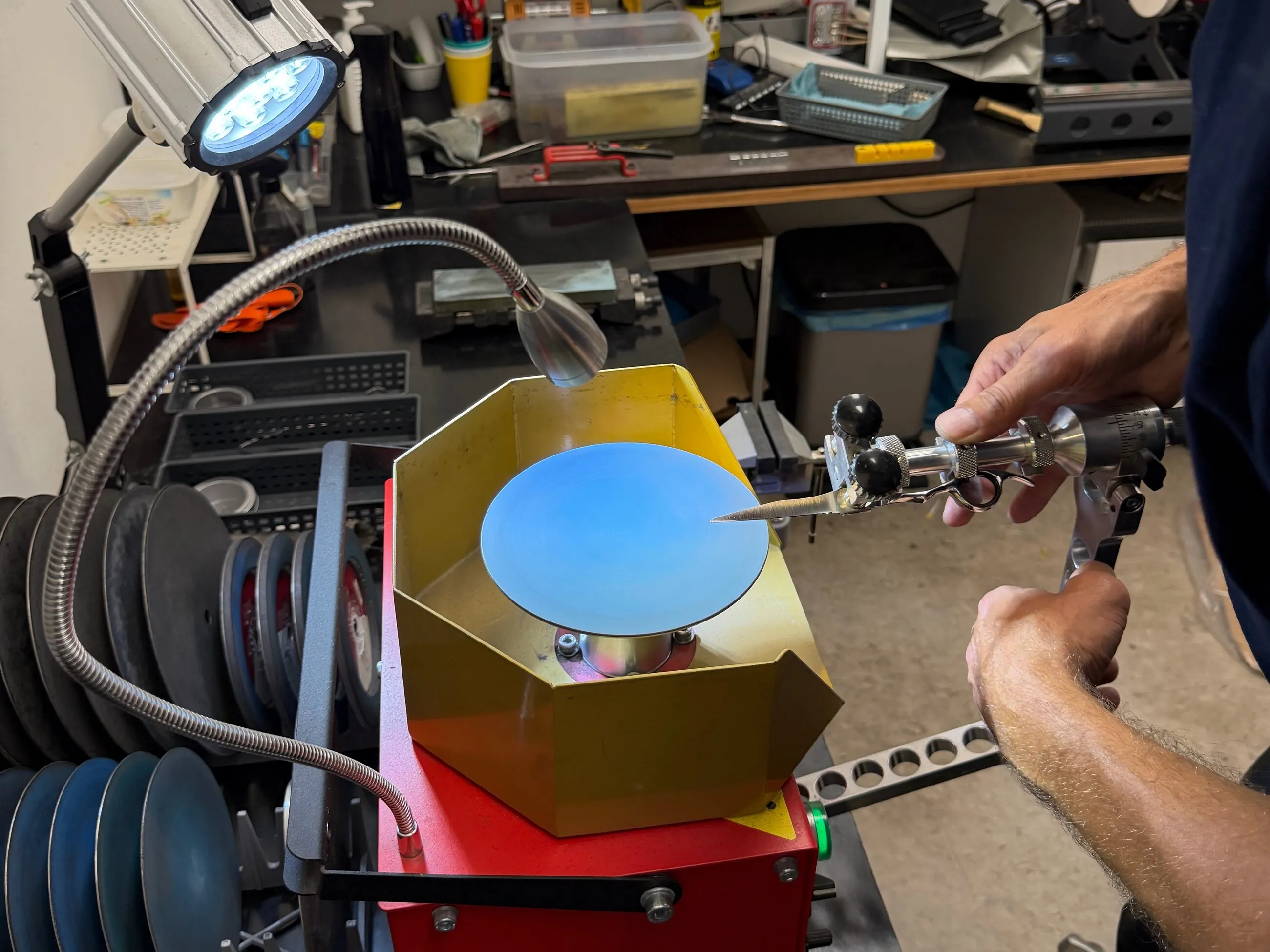
In the work it is important to keep the correct blade geometry and remove only as much material as is needed to restore the edge. After sharpening I check the result and how well the tool cuts or works, where its construction allows.
Axes
I sharpen an axe according to the shape of its blade and its intended use. I keep the correct edge geometry and make sure the edge is not too thin, because it has to withstand the impact of each blow. Before sharpening I also check the head, especially for cracks or other damage. I do not sharpen damaged axes that cannot be used safely.
Garden and forestry tools
I sharpen axes, hedge shears, mower blades and other garden tools. I adapt the sharpening to the construction of each tool and the shape of its edge.
It is important to keep the correct blade geometry and remove only as much material as is needed to restore the edge. With tools that have moving or mating blades I also take into account how they work together, because the quality of the cut depends not only on sharpness but also on the condition and position of the blades.
Woodworking and workshop tools
I sharpen chisels, plane irons and other workshop tools with a cutting edge. I take into account the shape of the blade, its angle and its purpose, because these affect how well it cuts and how long it stays sharp.
The aim is to restore a clean, even cutting edge and keep the geometry the tool needs to work properly. I adapt the extent of the sharpening to the condition of each blade and the type of damage.
Scissors for various purposes
I sharpen tailor’s, manicure, medical and other work scissors. Because scissors differ in construction, blade shape and purpose, I adapt the work to each model.
It is important to keep the correct geometry of the cutting edges and for the two blades to work together properly. After the work I check how smoothly they run and the quality of the cut along the blades, where the type of scissors allows.
Sharpening dental instruments
I also sharpen curettes used by dentists and dental hygienists. With these instruments the working edge has to be restored precisely while keeping the instrument’s original shape and geometry.
I adapt the work to the type of instrument and the condition of its working edge. Because these instruments are used in professional medical procedures, it is important that sharpening does not change their functional properties.
Price and turnaround
The price and turnaround depend on the type of tool, its condition, how demanding the work is and the quantity. Before handing in a larger quantity, or for more demanding work, we agree the scope, price and turnaround in advance.
Common questions
Which bladed tools do you take in for sharpening?
As well as hairdressing and grooming scissors, clipper blades and knives, I sharpen various other cutting tools. These include tailor's, manicure and medical scissors, axes, mower and brush-cutter blades, chisels, plane irons and selected dental instruments such as curettes. Whether a tool can be sharpened depends on its construction, condition and purpose, so less common pieces are best discussed in advance.
Can you sharpen any tool with a blade?
Not necessarily. Some blades have a special geometry, a serrated edge, a complex construction or damage that makes sharpening impossible or pointless. If I am not sure the work is suitable, I first inspect the tool or we discuss it based on a description or a photo.
Why does a mower blade have to be balanced after sharpening?
When spinning, even a small difference in weight between the two arms causes vibration. An unbalanced blade puts extra load on the bearings and other parts of the mower and can cause damage. So after sharpening I check the blade and balance it if needed before it goes back into use. Before sharpening it also has to be checked for cracks and other damage; a damaged blade cannot always be safely restored.
How should I prepare tools for drop-off or sending by post?
Clean off coarse dirt and wipe the tool dry. Protect the edges and points properly, and pack each piece so it cannot move in transit or damage the packaging or anything else. Send scissors assembled and closed, ideally in their original or a dedicated case. You can bring tools to the workshop at Ferrarska ulica 14 in Koper, or by prior arrangement send them by post from Slovenia, Croatia or Italy.