Services
Knife sharpening
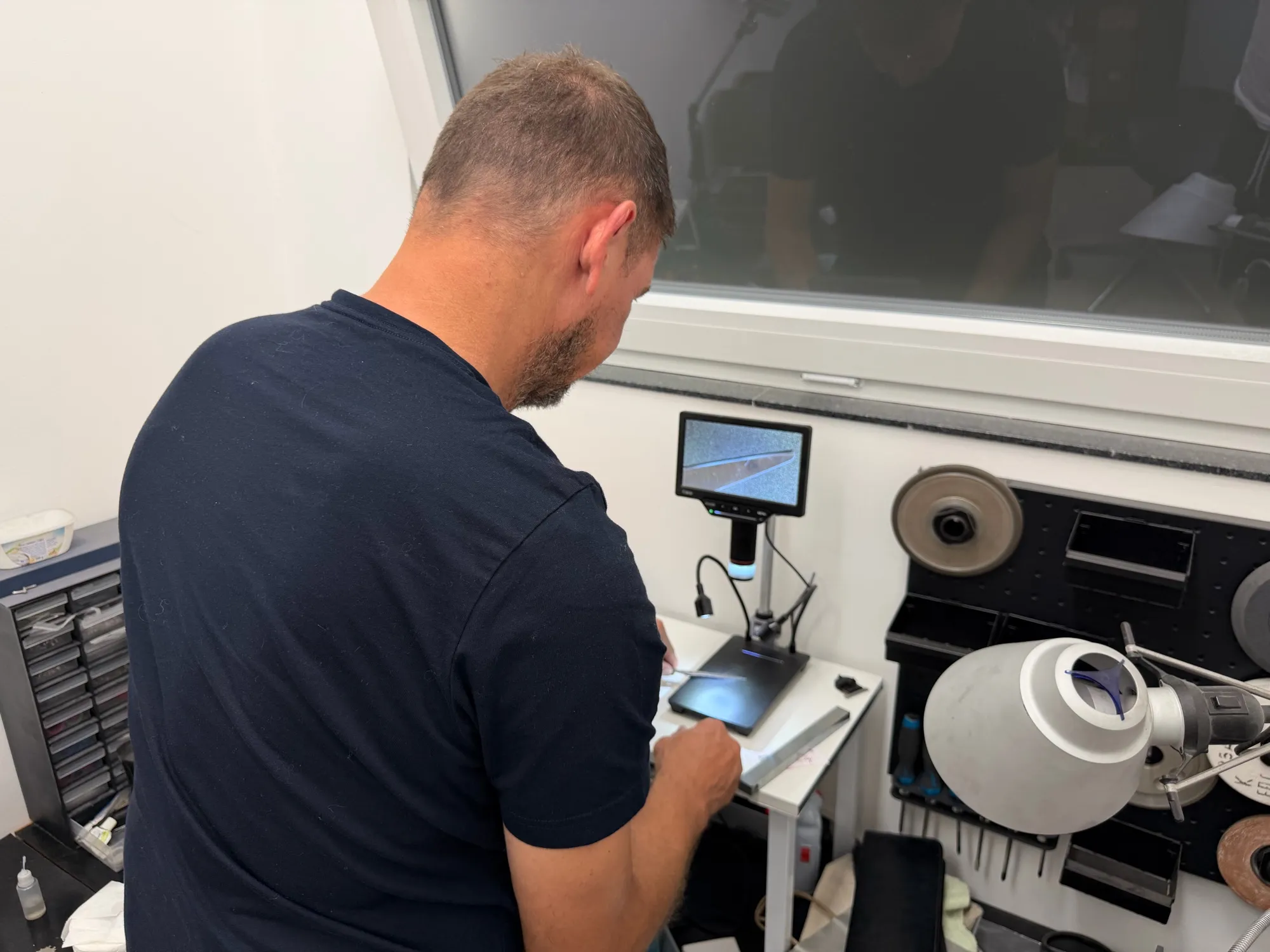
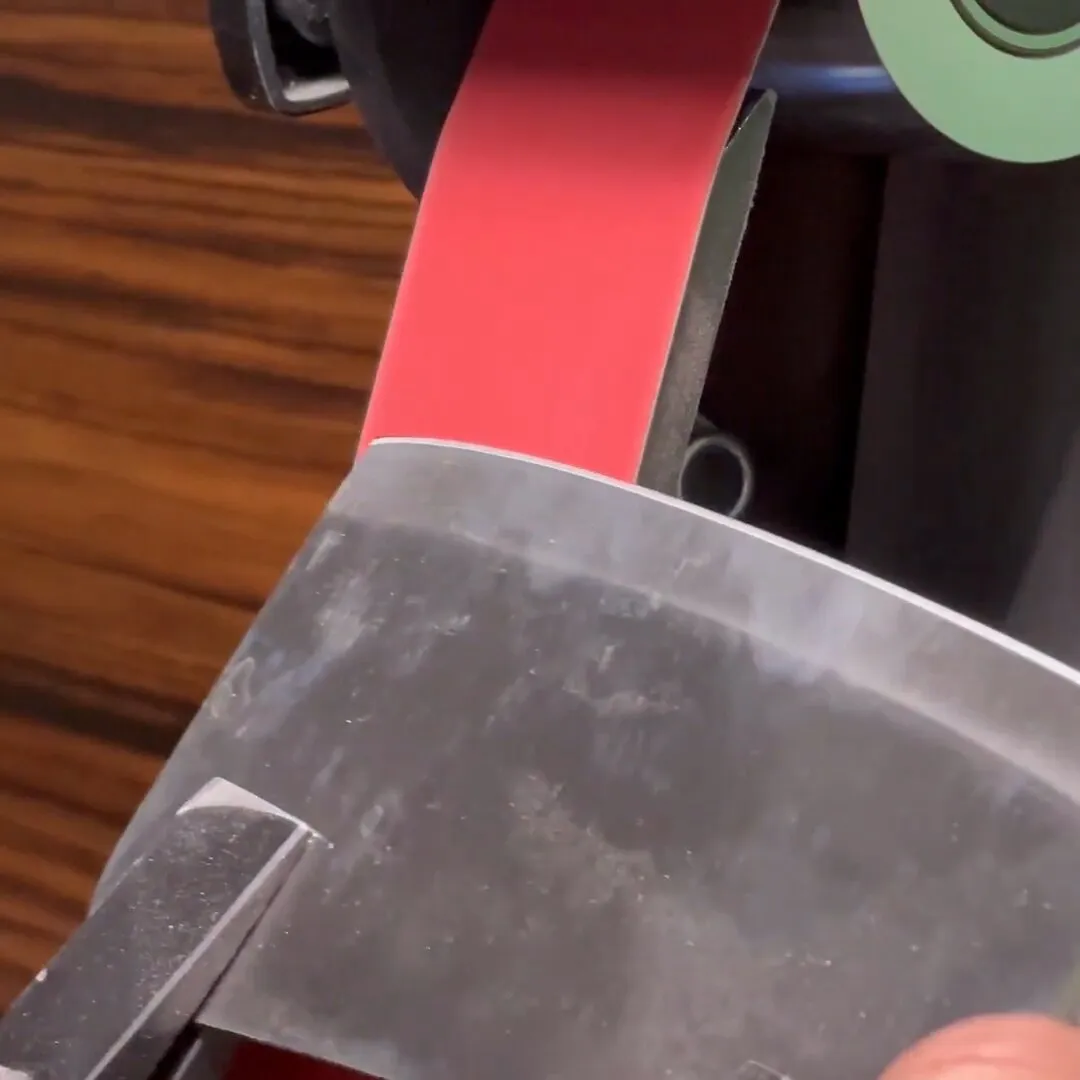
Sharpening of all kinds of kitchen knives, including Japanese knives. Sharpening runs in several stages, using five to seven different abrasives of different grits. That lets me work the cutting edge step by step and reach the right sharpness for the type and condition of the knife.
After sharpening I finish the blade on different leather surfaces, then test the sharpness and the quality of the cut in practice.
As a rule I do not sharpen serrated knives. Sharpening bread knives needs to be arranged in advance.
Sharpening price
The price is normally set by the type of tool and how demanding the work is. From a description and photos I can give you an approximate estimate. If the inspection reveals unforeseen damage or the need for additional work, I let you know about any change in price before starting the extra work.
- Sharpening of all kinds of kitchen knives, including Japanese.
- Multi-stage sharpening with 5–7 abrasives of different grits.
- Final finishing of the blade on different leather surfaces.
- A test of the sharpness and the quality of the cut after sharpening.
How the sharpening is done, step by step
Sharpening knives calls for a tailored approach, because knives differ in blade geometry, type of steel and intended use. With every knife I first assess the condition of the edge, then choose the method that suits its characteristics.
The aim is to restore an even, effective cutting edge, without removing material unnecessarily and while keeping the knife usable.
Inspection and the blade line
Before sharpening I check the condition of the edge, any chips and how straight the blade is. I also check whether the line of the blade has stayed even through earlier sharpenings, or whether a hollow has formed in places.
If a blade has been sharpened mainly in the middle many times, it can lose its original line and no longer cut effectively along its full length. So where needed I restore the edge along the whole blade, right up to the tip. That stops the irregularities from deepening with each later sharpening.
Sharpening angle and blade geometry
The right sharpening angle depends on the type of knife, the properties of the steel, the intended use and the customer’s wishes. A lower angle generally makes cutting easier and more effective, but the thinner geometry can make the edge more prone to damage and quicker to lose its sharpness.
When sharpening I look for the best balance between sharpness and durability of the edge. With the right choice of angle and geometry it is possible to get good sharpness while keeping a satisfactory durability. I adapt the final approach to the particular knife and how it is used.
For special requirements I can also use the TSPROF hand-guided system, where that method suits the knife. Where the blade geometry allows, I can also check the sharpening angle with a laser gauge.
Repairing edge damage and restoring the tip
Chips and other edge damage have to be removed so that an even blade line is restored. With deeper damage it is often not enough to work only the damaged spot; a larger part of the edge has to be ground until the damage is completely gone.
A damaged or broken tip needs separate treatment. Depending on the extent of the damage the tip has to be reshaped, which can also change the original shape of the blade. The aim is to restore the knife’s usefulness and keep as much material as possible, while ensuring the correct edge geometry.
Multi-stage sharpening and finishing
I use five to seven abrasives of different grits, working from coarser to finer. The choice and order of abrasives depend on the starting condition of the blade and how much work it needs. Over several successive stages I gradually shape the edge and refine its surface.
Sharpening is followed by finishing on different leather surfaces, which works the edge further. Then I test the knife in practice to check its sharpness and the quality of the cut.
Turnaround
Knife sharpening is usually done within 1–3 working days of receipt. With larger numbers of knives it can take longer.
Common questions
Do you sharpen single-bevel Japanese knives?
Yes. With single-bevel knives their characteristic geometry has to be kept. I work the ground side to restore the cutting edge, taking into account the shape and condition of the back of the blade. If that has become rounded or damaged from earlier sharpening, extra work may be needed. I judge the extent of the work from the condition of the knife.
The knife was sharp after sharpening, but two days later it no longer cuts well. Why?
There can be several reasons. A burr can be left on the edge that quickly folds over or breaks off in use, so the knife loses its initial sharpness. Edge retention also depends on the properties of the steel, the edge geometry and how the knife is used. The cutting surface matters too: glass and ceramic boards wear the edge faster. If the problem keeps recurring, it is worth checking the knife and how it is used.
What sharpening angle will you choose for my knife?
I adapt the angle to the type of knife, the properties of the steel and how it is used. A lower angle generally cuts more easily, but the edge can be more prone to damage. A higher angle can make it more durable, but also affects how well it cuts. I take the original blade geometry into account and look for the right balance between sharpness and durability.
Can you sharpen a knife to an exact angle?
For special requirements I can also use the TSPROF hand-guided system, which gives precise control of the sharpening angle, where that method suits the knife. Where the blade geometry allows, I can also check the angle with a laser gauge. Special requirements for the angle or method are best agreed before the work starts.
Can I bring in all my kitchen knives at once?
Yes. We agree the number of knives and the turnaround in advance by phone or email, so you can plan around having them away. The usual turnaround is one to three days, and can be longer for larger quantities. If needed, we can also arrange to bring the knives in several batches.
Do you sharpen serrated knives and slicer blades?
Serrated knives need a different process from knives with a smooth edge. Because the shape and geometry of the individual teeth have to be taken into account, sharpening needs to be arranged in advance. The same goes for the circular blades of slicers and the knives and plates of mincers, where matching parts may need to be worked together.
How do I send knives by post?
Protect the knives securely before sending, especially the edge and the tip. Wrap each knife separately or put it in suitable protection so it cannot move in transit or damage the packaging or anything else. Then pack them in a sturdy cardboard box and send by tracked post to: Igor Komadina s.p., Ferrarska ulica 14, 6000 Koper, Slovenia.